Quick answer
Office clearance is ideal for desks, chairs, filing cabinets, storage units, IT equipment and general office waste. Plan ahead for access, building rules and any items that need secure disposal or recycling.
What office clearance can cover
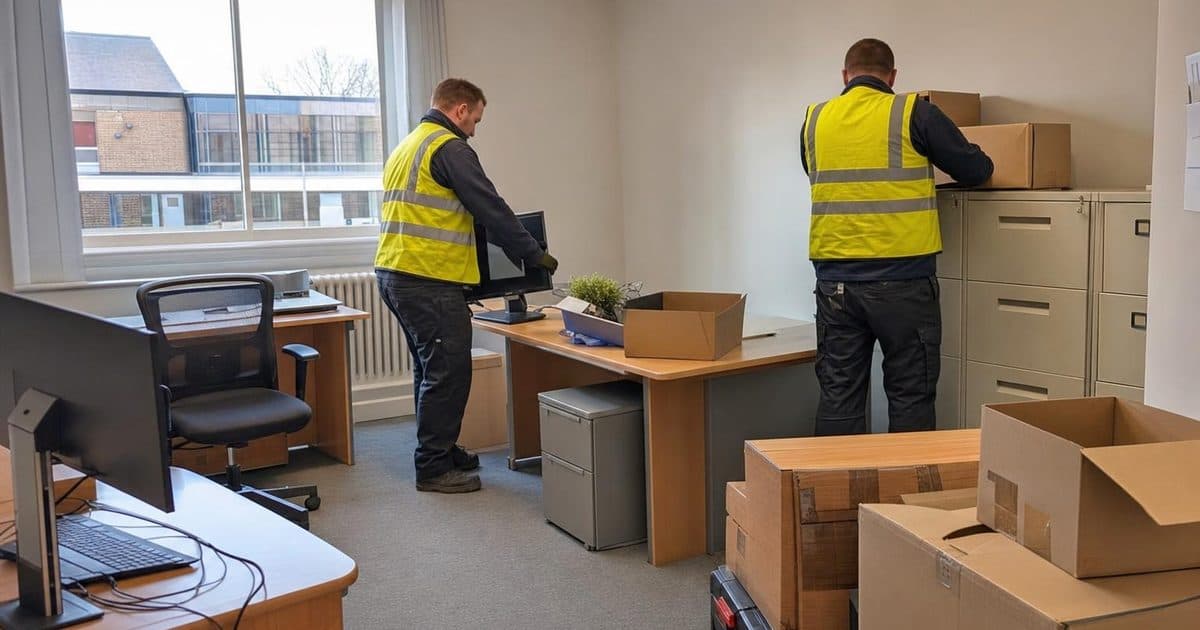
Office clearance is useful when a business is moving, closing a workspace, refreshing the layout or simply removing surplus items that have built up over time. In Fareham, that might mean clearing a small office, a shared workspace, a back room, or a larger commercial unit.
Most clearances can include bulky furniture, everyday office rubbish and items that are no longer needed. A well-planned service helps keep walkways clear, protects the building, and reduces the amount of lifting your team has to do.
- Desks, chairs and meeting tables
- Filing cabinets, shelving and storage units
- Pedestal drawers and reception furniture
- Cardboard, general office waste and mixed rubbish
- IT equipment and small electrical items
- Printers, monitors, cables and accessories
Planning an office clearance in Fareham
The easiest way to keep an office clearance straightforward is to sort the job before the team arrives. Decide what is staying, what is going, and whether any items need to be moved to another room, stored temporarily or taken away for disposal.
If you are working to a move-out date, it helps to build in time for the clearance before handover. That gives you a chance to cheque walls, corners, cupboards and under-desk storage so nothing important is left behind.
Check access and building rules
Office buildings often have practical limits that can affect the clearance. These may include loading bay times, lift sises, parking spaces, site access codes and restrictions on noise or working hours. Sharing these details early can save delays on the day.
If the office is in a shared building or busy commercial area, it is also sensible to plan for stair use, corridor width and the route items will take out of the property. That makes the job safer and helps avoid disruption to neighbouring businesses.
Make a simple room-by-room list
A short list for each room is usually enough. For example, you might note which desks are leaving, which cupboards are staying, and whether there are any items that need careful handling. This is especially helpful when several staff members are clearing different parts of the office.
Items that need extra care
Some office items are straightforward to remove, while others may need more planning. IT kit, confidential paperwork and certain electrical items are best separated from general furniture so they can be dealt with properly.
It is also worth chequeing for personal belongings, archived files, leasehold fittings and anything the landlord expects to remain in place. A final sweep of storage spaces, drawers and cupboards can prevent last-minute problems.
| Item type | Typical approach |
|---|---|
| Desks and chairs | Remove as standard bulky office furniture |
| IT equipment | Separate for secure handling and appropriate disposal |
| Paper files | Sort before removal, especially if they contain sensitive information |
| General office waste | Bag and collect with other non-reusable rubbish |
How to reduce disruption
Most businesses want the office cleared with as little interruption as possible. A calm, staged approach usually works best, especially if staff are still working in part of the building while the clearance takes place.
Try to keep walkways open, label items clearly and group similar pieces together before the team arrives. That makes loading quicker and reduces the amount of sorting needed on site.
- Remove personal items from desks and storage units first
- Keep items for reuse, donation and disposal in separate areas
- Protect floors and walls in tight access routes
- Arrange keys, access codes and parking details in advance
- Let staff know which rooms are being cleared and when
When an office move is involved
If you are moving to a new Fareham office, a clearance can be coordinated around the move so that only unwanted furniture and waste are taken away. This can help avoid paying to transport items you no longer need.
It is often best to separate the move into two parts: what is being reused in the new space, and what is being removed. That keeps the process tidy and makes it easier to cheque that nothing useful is thrown away by mistake.
Reuse, recycling and responsible disposal
Not every item from an office needs to be treated as waste. Some furniture can be reused elsewhere, and many office items can be sorted for recycling. The right approach depends on condition, material and whether the item is still suitable for use.
Responsible disposal matters most where items include electrical parts, confidential material or mixed components. If you want to clear more than just office furniture, services such as Commercial Waste Removal, Furniture Removal and E Waste Disposal can be useful depending on what needs to go.
If your office clearance includes a broader site clean-up, you may also find Office Clearance helpful as a direct service option alongside related removal work.